
What Is Hot Yoga?
If you’ve come across the term hot yoga, you might be wondering what on earth that is and what it entails. Yoga is not usually a sport associated with sweating or exhaustion, so you might feel a little surprised by it.
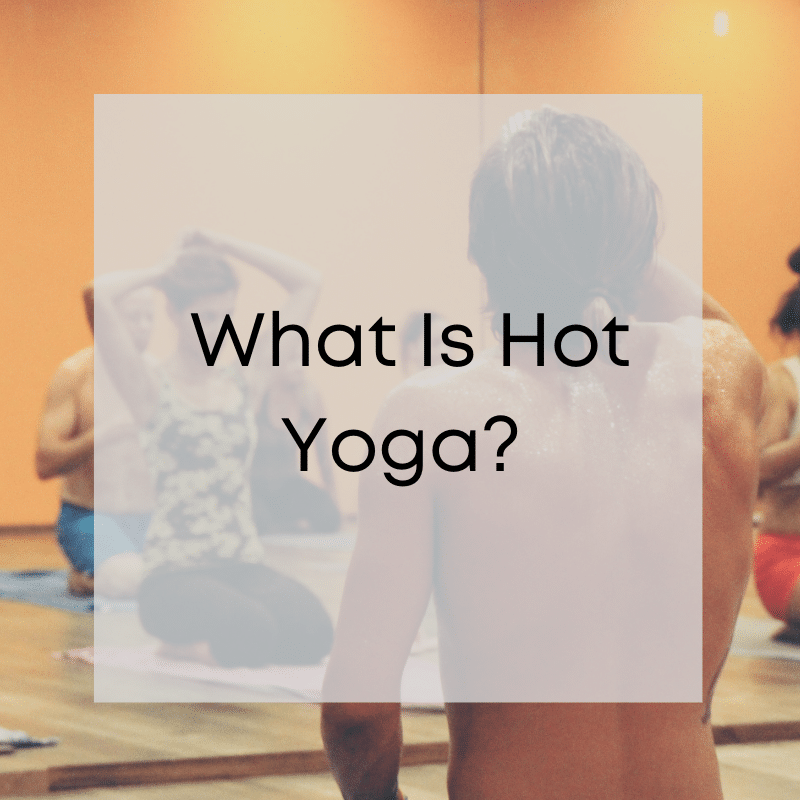
Hot yoga is a vigorous type of yoga that is practiced in a hot and humid environment. The environment is intended to mimic the conditions in which yoga would originally have been practiced, and its aim is to increase the amount of exercise that the muscles do during the workout, as well as increase the amount the person sweats.

What Is Meant By Hot Yoga
Hot yoga can refer to quite a few different approaches and styles, but it is always about doing strenuous yoga in a heated environment. You are likely to have heard of Bikram yoga, in which the room is heated to 105° F. Bikram exercise sessions last for 90 minutes as a standard, and the humidity should be 40 percent.
There are several other kinds of hot yoga too, some of which are more relaxed in their approach, but still seek to achieve sweating and a harder workout by heating the environment of the classes.
You might wonder what led to hot yoga being developed, since yoga is usually associated with relaxation, deep breathing, and gentle movements. Hot yoga is thought to help eliminate toxins from and increase blood circulation, as well as boosting the heart rate.
It is more geared toward weight loss and muscle toning than standard yoga, which usually focuses on balance, relaxation, and meditation techniques.
Hot Yoga Poses
Hot yoga can involve all kinds of poses, but the more difficult and strenuous ones are usually associated with the activity – especially Bikram yoga, which has a fixed set of poses. Here are the poses you might expect to do if you attend a Bikram yoga class:
- Half moon with hands to feet
- Dead body pose (a second time)
- Toe stand
- Awkward pose
- Standing separate leg head to knee pose
- Cobra pose
- Bow pose
- Sit-up pose
- Balancing stick
- Dead body pose
- Kapalbhati In Vajrasana
- Eagle pose
- Camel pose
- Standing separate leg stretching pose
- Tree pose
- Fixed firm pose
- Half tortoise pose
- Wind removing pose
- Rabbit pose
- Spine twisting
- Full locust pose
- Head to knee with stretching
- Standing head to knee
- Pranayama pose
- Standing bow
- Locust pose
- Triangle pose
Many of these are challenging yoga poses that will help to get your heart rate up and really stretch your muscles, especially in a hot environment. Another kind of hot yoga class might use a combination of any of these, or involve other poses, but Bikram yoga should always follow the above structure and flow.

What Are The Benefits Of Hot Yoga?
There are thought to be a few major benefits from doing yoga in a heated room, some of which include:
- Better flexibility: The warmth of the yoga studio makes you more flexible; warm joints bend more easily than cold ones. That makes it safer to push your limits and stretch out without hurting yourself.
- Improved bone density: Doing a variety of different poses also helps to increase bone density, which is particularly important in older people, who may be suffering from bone degradation. Bikram yoga might be able to help mitigate osteoporosis.
- Improved heart health: The heat creates a more challenging workout, meaning that your heart gets more exercise than if you do yoga in a cool environment.
- More sweating: One of the key goals of hot yoga is to increase sweating, which many people believe is a good way to remove toxins from the body. It is also thought to improve the complexion.
- Mood improvements: Doing any form of exercise can help to boost your mood, but hot yoga carries some of the benefits that yoga does in being particularly good for relaxation and tackling depression. Although it is a fast workout, it still has some room for meditative thought and deep breathing.
- Reduced stress: Again, any exercise can improve a person’s well-being, but it has been shown that participating in regular hot yoga classes can reduce your stress levels and make you feel better.

What Are The Dangers Of Hot Yoga?
Hot yoga is not for everyone, however. It is a strenuous workout and should not be launched into without warning or care, especially if you are not fit. You should speak to your doctor before starting a hot yoga class.
People who may particularly struggle with hot yoga include anyone who:
- Suffers from heat intolerance
- Suffers from heart disease
- Is pregnant
Some of the dangers of hot yoga include:
- Heat exhaustion
- Dehydration
- Dizziness
- Nausea
You should make sure you drink plenty of water before, during, and after a hot yoga class, and stop if you start to feel unwell.

Hot Yoga Vs Yoga
The benefits of hot yoga over regular yoga have been questioned by some. The idea that you can sweat out toxins has been challenged, and many people believe that it is better to do normal yoga. The benefits of the poses and flexibility can be gained without some of the dangers.
However, many people enjoy doing hot yoga and feel that it has more benefits than normal yoga. The heated and humid environment more closely mimics the conditions in which yoga would originally have been practiced, and they enjoy the challenge it presents.
Yoga and hot yoga can be great complements to each other, and it’s possible to enjoy and benefit from both kinds, without needing to choose one over the other.

Conclusion
Hot yoga is a great way to get a good workout while improving your flexibility and strengthening your muscles. It is not meditative and relaxing in the way that normal yoga is, but it is good for your circulation and your heart health. If you are looking for a way to increase your fitness levels, it’s a fantastic option.
Try out a hot yoga class and see what you think, but don’t overdo it, especially in your first session!
Most Recent Blog Articles

How To Become A Yoga Instructor
Ever thought of becoming a yoga instructor? It's a great career and very rewarding. Find out how you can follow your dream ... Read on

What Is Power Yoga?
Power yoga is an adaptation of the classic yoga poses, which makes them more challenging. It concentrates on what it calls “vinyasa” ... Read on

Yoga For The Menopause
Menopause is an important stage of a woman’s life. It is marked by the cessation of menstruation, which can lead to many ... Read on

How Acupressure Points Work
Have you ever felt those weird, tingling sensations when someone presses on your hand or foot? Those are called acupressure points ... Read on
What Is Hot Yoga?
If you’ve come across the term hot yoga, you might be wondering what on earth that is and what it entails. Yoga is not usually a sport associated with sweating or exhaustion ... Read on

What Is Baby Yoga?
Baby yoga is a relatively new trend in the world of exercise and parenting. It’s also known as ‘yoga for babies’. But what does it entail? ... Read on

Yoga For Runners
Have you ever wondered about yoga for runners and whether it is something that could help to up your running game? Does the flexibility and balance offered by this kind of exercise ... Read on

Chakras and Their Meanings
Chakra is closely associated with yoga. In this article we take a closer look at the seven chakras and their meaning. Read on.

How To Clean A Yoga Mat
Yoga mats will often get put through their paces. Regular yoga means your mat is going to absorb sweat, dirt, oil and other grime. ... Read on